

Vol. 7 No. 1 (2025): Integrated Maritime Security: Geopolitics, Technology, and Environmental Threats
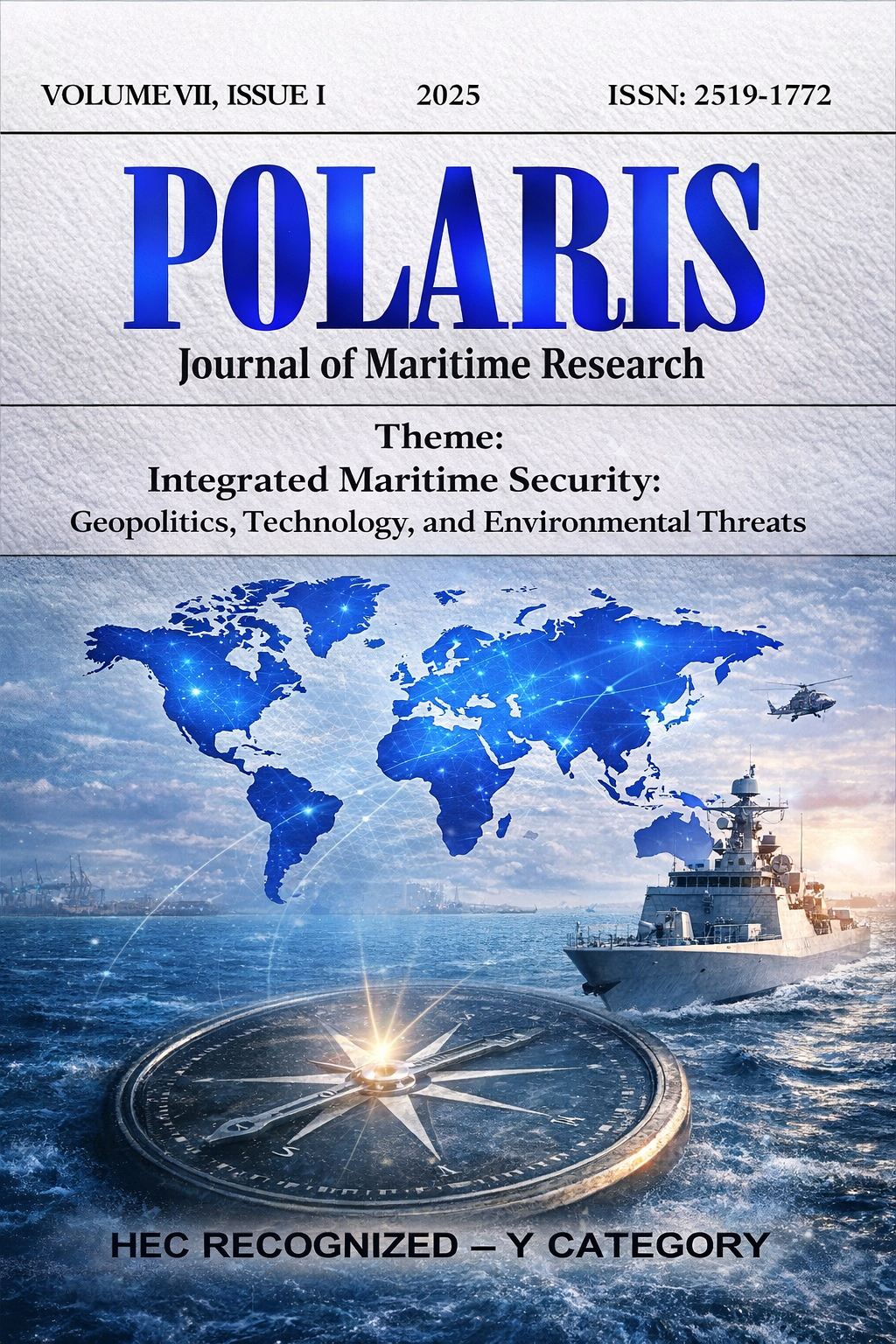
The contemporary maritime domain is undergoing profound transformation driven by evolving security paradigms, technological innovation, and escalating environmental challenges. This issue of POLARIS: Journal of Maritime Research brings together a diverse set of scholarly contributions that collectively examine the multidimensional nature of integrated maritime security, emphasizing the intersections of geopolitics, technology, governance, and environmental sustainability.
Several articles in this volume address the growing role of advanced technologies in enhancing security architectures. The study on artificial intelligence–based gait analysis highlights the potential of intelligent surveillance systems in strengthening security frameworks, with implications extending beyond land-based applications into port security and maritime infrastructure protection. This technological lens underscores the increasing reliance on data-driven and AI-enabled solutions for modern security challenges.
Environmental governance and regulatory alignment form another core focus of this issue. The review of Pakistan’s alignment with the Global Chemical Framework and the GHS, in conjunction with the Basel, Rotterdam, and Minamata Conventions and IMO standards, critically evaluates national compliance within the broader maritime and environmental safety regime. Complementing this, geo-spatial and spatiotemporal studies of Pakistan’s coastal belt and Karachi’s coastal waters provide empirical evidence of environmental degradation, heavy metal pollution, and declining water quality, posing serious threats to maritime sustainability, fisheries, and coastal livelihoods.
The geopolitical dimension of maritime security is explored through a comparative analysis of India and China’s maritime security policies in the Indian Ocean, offering insights into naval modernization, strategic competition, and alliance formation. This contribution situates regional dynamics within the wider Indo-Pacific security architecture, highlighting the implications of great power rivalry for regional stability and maritime order.
Taken together, the articles in this issue reflect the journal’s commitment to interdisciplinary inquiry and policy-relevant research. By integrating perspectives from security studies, environmental science, international law, and technological innovation, this volume contributes to a deeper understanding of the challenges and opportunities shaping the maritime domain. It is hoped that these studies will inform policymakers, practitioners, and scholars engaged in advancing sustainable, secure, and resilient maritime governance at national, regional, and global levels.
Published:
31-12-2025


